
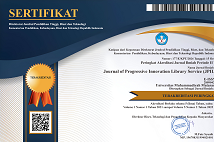





Journal of Progressive Innovation Library Service (JPILS) welcomes scholarly manuscripts that contribute to the advancement of knowledge and practice through community service, community empowerment, and critical analysis of innovative concepts and practices in the fields of social sciences, information science, library science, and archival studies.
Published by the Library and Information Science Study Program, Faculty of Social and Political Sciences, Universitas Muhammadiyah Mataram, Indonesia, JPILS serves as a platform for disseminating the results of community engagement activities, applied knowledge, and innovative solutions to social and community challenges. The journal encourages contributions that demonstrate meaningful benefits, practical implementation, and sustainable improvements in community capacity and access to information.
Submitted manuscripts must align with the journal's focus and scope, demonstrate clear objectives and appropriate implementation or analytical methods, and present evidence-based outcomes with meaningful implications for community development and professional practice.
A. Community Service and Community Empowerment Articles
These articles report community service initiatives designed to address identified community needs, improve local capacities, and promote sustainable social development.
Topics may include community empowerment, participatory development, community capacity building, social innovation, local resource development, collaborative partnerships, and community-based problem-solving initiatives.
Manuscripts should describe the community's needs, program objectives, target participants, implementation methods, stakeholder involvement, outcomes, evaluation procedures, and potential for sustainability or replication.
B. Library Development and Community-Based Library Services
These articles focus on the development, improvement, and implementation of library services that support education, literacy, information access, and community empowerment.
Topics may include public library development, school library improvement, university library outreach, village libraries, community reading centers, mobile library services, collection development, reading promotion, and innovative community-based library services.
Manuscripts should explain the challenges addressed, the intervention implemented, community participation, service improvements, evaluation results, and the potential contribution to sustainable library development.
C. Digital Innovation and Information Technology for Community Development
These articles discuss the application of digital technologies and information systems to improve library services, information access, and community capacity.
Topics may include library websites, library automation, digital repositories, open-source library systems such as SLiMS, digital literacy training, information management systems, digital preservation, artificial intelligence applications, and technology-enabled community services.
Manuscripts should describe the needs assessment, technology or innovation introduced, implementation process, participant training, evaluation methods, outcomes, and the implications for accessibility, effectiveness, and sustainability.
D. Information Literacy, Reading Culture, and Digital Literacy
These articles report initiatives that improve the ability of individuals and communities to access, evaluate, use, and communicate information effectively.
Topics may include information literacy education, digital literacy workshops, reading-interest development, school literacy programs, family literacy, media and information literacy, critical information evaluation, and community education through library services.
Manuscripts should identify the literacy needs of the target participants and explain the educational approach, implementation activities, participant engagement, learning outcomes, evaluation methods, and opportunities for continued development.
E. Community Empowerment through Information Access and Knowledge Management
These articles examine how information resources, knowledge-sharing practices, and information services can support community development and improve access to relevant knowledge.
Topics may include community information centers, local knowledge documentation, indigenous and local knowledge preservation, knowledge management, information dissemination, digital inclusion, public information access, and information-based community empowerment.
Manuscripts should demonstrate how the proposed intervention responds to information needs, involves relevant stakeholders, improves access to or use of information, and contributes to community capacity or sustainable development.
F. Archival Services, Documentation, and Digital Preservation
These articles address community engagement and innovation in archival management, documentation, and preservation of information resources.
Topics may include community archives, institutional records management, digital archives, local history documentation, preservation of cultural heritage, digitization of historical documents, archival literacy, and training in records management.
Manuscripts should explain the documentation or preservation challenges, the methods and tools applied, the participation of community members or partner institutions, the outcomes achieved, and the significance of the initiative for long-term access to information and cultural preservation.
G. Education, Training, and Professional Capacity Building
These articles report training and educational initiatives intended to strengthen the competencies of librarians, information professionals, educators, students, and community members.
Topics may include librarian competency development, library management training, cataloging and classification workshops, digital skills training, information literacy instruction, library technology adoption, professional development, and capacity building for community-based information services.
Manuscripts should describe the participants' needs, training objectives, instructional methods, materials, assessment procedures, learning outcomes, and plans for sustaining or applying the competencies developed.
H. Social Innovation, Collaborative Partnerships, and Best Practices
These articles present innovative approaches, collaborative initiatives, and documented good practices that address community problems through library, information, archival, or related social science interventions.
Topics may include university–community partnerships, school–library collaboration, participatory service development, cross-institutional initiatives, community-based innovation, social entrepreneurship related to information services, and replicable models of community engagement.
Manuscripts should provide the institutional or community context, the problem addressed, the innovation introduced, stakeholder roles, implementation challenges, measurable outcomes where applicable, lessons learned, and recommendations for replication or improvement.
I. Manuscript Submission Requirements
All manuscripts submitted to JPILS should meet the following requirements:
- Scope and Relevance: The manuscript must align with JPILS's focus on community service, community empowerment, and the application of knowledge in social sciences, information science, library science, and archival studies.
- Originality: The manuscript must present original scholarly work and must not be under consideration for publication by another journal simultaneously.
- Clear Objectives: The manuscript must identify the problem or community need being addressed and establish clear, achievable objectives.
- Appropriate Methods: The manuscript must explain the needs assessment, intervention design, implementation procedures, participant involvement, and evaluation methods, as applicable.
- Evidence of Outcomes: The manuscript should present relevant evidence of implementation results, participant responses, changes in knowledge or skills, service improvements, or other outcomes appropriate to the program.
- Scholarly Contribution: The manuscript must provide meaningful insights, practical innovations, lessons learned, or recommendations that contribute to the improvement of community services and professional practice.
- Community and Partner Involvement: Authors should explain the roles of target communities, partner institutions, and relevant stakeholders in program design, implementation, and evaluation.
- Publication Ethics: Authors must comply with research integrity standards, proper citation practices, authorship requirements, confidentiality obligations, and applicable ethical approval and informed consent requirements.
- Disclosure Statements: Authors must provide information on funding, conflicts of interest, author contributions, and the use of artificial intelligence or data availability when required by the journal's policies.
- Formatting and Style: Manuscripts must follow the latest JPILS author guidelines and official manuscript template available on the journal website.
J. Manuscripts Not Prioritized for Publication
JPILS does not prioritize manuscripts that:
- Fall outside the journal's focus and scope.
- Describe routine activities without explaining the community needs, objectives, implementation methods, or outcomes.
- Present ceremonial reports, event documentation, or activity descriptions without sufficient scholarly analysis.
- Lack a clear intervention framework, appropriate evaluation, or evidence supporting the reported outcomes.
- Merely describe the development of a website, application, or information system without explaining its relevance, implementation, use, or benefits to the target community.
- Reproduce previously published material or report activities without demonstrating originality and meaningful added value.
- Fail to provide sufficient information about participant involvement, partner contributions, or the relevance of the program to community needs.
- Do not comply with the journal's submission requirements and publication ethics policies.
K. Editorial Screening and Peer Review
All manuscripts submitted to JPILS are subject to initial editorial screening and, where they meet the journal's requirements, peer review in accordance with the journal's editorial policies.
The editorial team evaluates manuscripts based on their relevance to the journal's scope, originality, methodological appropriateness, quality of implementation or analysis, evidence of outcomes, significance for community engagement, and compliance with publication ethics.
The editorial team makes the final publication decision based on the assessment of the manuscript and the applicable editorial policies. Submission does not guarantee acceptance or publication.
Official Journal Website: https://journal.ummat.ac.id/index.php/JPILS
Publisher: Universitas Muhammadiyah Mataram, Indonesia.
Journal of Progressive Innovation Library Service (JPILS)
Program Studi Perpustakaan dan Sains Informasi
Fakulatas Ilmu Sosial dan Ilmu Politik Universitas Muhammadiyah Mataram
Jln. K.H. Ahmad Dahlan No. 1 Kota Mataram, Nusa Tenggara Barat, Indonesia
Email: [email protected]; e-ISSN: 2809-042X
-------------------------------------------------------------------------
Licengcing:

This licensed under a Creative Commons Attribution-ShareAlike 4.0 International License.
-------------------------------------------------------------------------
Indexing:


